Civic Action Gap Semester

A partnership between Amigos de las Américas and
Tufts University's Tisch College of Civic Life

Explore social change across the Americas, do meaningful work through a civic volunteership, connect across borders and cultures, and earn college credit. Join virtually from anywhere in the world.

Schedule a Call

On Creating Virtual Community

“I have felt so supported by all of the members of my cohort throughout the project, especially as we've become more comfortable with each other.

I love how every single day they bring a positive attitude and an eagerness to learn about leadership and about other cultures.”

–Juliana, AMIGOS Virtual Program Volunteer

Experience Summary

  • 12 Weeks

    What's Included

    ‒ Full Tufts University course - CVS 99: Internships for Social Change

    ‒ Earn 3 units of course credit from Tufts University

    ‒ 10-week volunteership placement, including training

    ‒ Engage design thinking to develop and complete a civic engagement project

    ‒ Earn up to 80 service hours

    ‒ Connection to a mentor to discuss your career interests

    ‒ Spanish or English language instruction (three hours per week)

    ‒ Llama Lounge and language cafe meetups to connect with other students

    ‒ Virtual tours of AMIGOS partner agencies across Latin America

What makes this experience unique?

College-level course curriculum provided by Tufts University faculty, Spanish language instruction, career mentorship, and a volunteership placement create a one-of-a-kind opportunity for students to understand their role in their community and grow as leaders.

  • local_library

    Course Curriculum

    Faculty from Tufts University's Tisch College of Civic Life lead modules on topics like civic engagement, cultural humility, and leadership.

  • language

    Language Training

    Spanish lessions tailored to your level by instructors in Latin America. Join the weekly Language Café, an engaging time for real conversation in Spanish and English.

  • nature_people

    Volunteership

    An opportunity to safely plug in to an organization in the U.S. or Latin America working in areas such as public health, food security, and civic engagement in the era of COVID-19.

  • computer

    Career Mentors

    We match students with a career mentor. Throughout the semester, students connect with their mentor to delve into their personal leadership style, explore career paths, and more!

  • group

    Racial Equity and Justice Education

    Lean into important work on racial equity and justice across the Americas through facilitated coursework. Complement this curriculum with workshops from leaders taking action in their communities.

  • question_answer

    Cultural
    Exchange

    Dive into your own culture and learn to understand cultural bias, the role of language in culture, and global citizenship. Virtually visit AMIGOS partner agencies in Latin America working to empower youth and create strong healthy local communities. Make friends with students around the world!

Course Description

CVS 99: Internships for Social Change

Is it really possible to change the world? What can we, alone or with others, do to have a positive impact on entrenched systemic problems? These are the kinds of questions we will ask in this course, an integral component to your volunteership at an organization committed to the public life and health of our communities.

This course is taught by Grace Talusan specifically for Civic Action Gap Semester students.

  • visibility

    Reflection

    You will be encouraged to reflect and think deeply about what role you want to play in the challenges of your time while building skills to work effectively with others. Your exploration will be based both on what you read, write, and discuss in this course and what you do, see, think, feel, and hear at the internship.

  • menu_book

    Theory + Practice

    You will link theory and practice in order to better understand both concrete engagement and academic analyses through a process of critical thinking, reading, writing, and dialogue in our learning community and by examining your volunteership experiences along with your organization’s stated claims and activities in promoting and contributing to peaceable societies and sustainable communities.

  • location_city

    Engaged Citizenship

    You should gain a more grounded understanding of the relationship of public service, social responsibility, active citizenship, leadership, and social change.

  • local_florist

    Exercise Your Curiosity

    Come with an open, curious mind towards what we can discover and learn from each other, ourselves, and the course materials. You will have assignments and class meetings culminating in an end of semester project of your choice.

Volunteership

A hallmark of the Civic Action Gap Semester is the opportunity to complete a volunteer civic placement - a "volunteership."

Volunteership (noun):

A learning and service exchange that contributes to a partner organization's mission while exploring the impact of civic action on social, economic, and political issues across the Americas.

Focus on issues you're passionate about while working with professionals across a variety of fields such as public health, equality and justice, and food security. Plug in virtually and take action safely during the era of COVID-19.

Students will be placed in volunteerships with community organizations in the United States or Latin America, depending on Spanish fluency.

  • Step 2

    Yo Quiero Yo Puedo

    Yo Quiero Yo Puedo is a Mexican civil society organization that facilitates human, social, and economic development.

  • Step 1

    Center for Latin American Studies, University of California, Berkeley

    CLAS works to create a community of Latin Americanist students, scholars, and practitioners; to develop innovative policy solutions through our unique network; and to enhance public understanding of Latin American culture and politics in the United States.

  • Step 1

    Girls Empowerment Network (GIRLS)

    The Girls Empowerment Network mission is to ignite the power in girls by teaching them the skills to thrive and believe in their ability to be unstoppable. GIRLS addresses an increasing trend among middle school aged girls – a systematic decline and sometimes permanent loss of self-esteem, the outcome of which can be devastating: epidemic levels of anorexia/bulimia, self-mutilation, depression, low academic achievement, teen pregnancy, and drug abuse.

Guest Speakers

  • Step 1

    Scott Horsley

    Scott Horsley is NPR’s Chief Economics Correspondent. He reports on ups and downs in the national economy as well as fault lines between booming and busting communities.

    Horsley spent a decade on the White House beat, covering both the Trump and Obama administrations. Before that, he was a San Diego-based business reporter for NPR, covering fast food, gasoline prices, and the California electricity crunch of 2000. He also reported from the Pentagon during the early phases of the wars in Iraq and Afghanistan. Horsley earned a bachelor’s degree from Harvard University and an MBA from San Diego State University. He is an AMIGOS alumnus (’83, ’84) and currently lives in Washington, D.C.

  • Step 2

    Cecilia Garcia Ruiz

    Cecilia is a Mexican feminist and human rights advocate with over a decade of combined experience working in the civil society sector, the public sector and as an independent consultant to advance gender equality.

    As Regional EM2030 Coordinator for Latin America and the Caribbean at Equal Measures 2030, she works with girls and women's rights organizations in the region to strengthen their data-driven advocacy skills to advance gender equality and achieve the Sustainable Development Goals. Cecilia holds a Master’s Degree in Public Policy and Gender, and a Bachelor’s Degree in Psychology.

  • Step 1

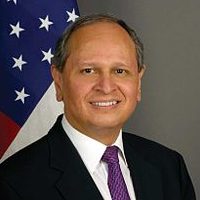
    Arnold Chacon

    Ambassador Arnold Chacon is an AMIGOS alumnus and career member of the United States Foreign Service currently serving as the Senior Vice President at the National Defense University.

    He has held senior leadership positions at the State Department, including Chief of Mission in Guatemala and Chief Human Capital Officer. He is widely recognized for his expertise in Latin American and European affairs, talent management, communication strategies and building a diverse workforce.

  • Step 1

    Grace Alderson, MPH

    Grace Alderson, MPH, is an Operations Chief in the COVID-19 pandemic response in Santa Clara County, California. Pre-COVID-19, Grace was a Senior Community Health Planner, specializing in developing grassroots initiatives dedicated to health equity and increasing access to healthcare.

    Over the past 10 years, Grace has worked on community health programming across the U.S. and throughout Mexico, Guatemala, Uruguay, Spain, Kenya, and China. Grace is an AMIGOS alumna (Volunteer in Mexico ’03, Paraguay ’04, Project Supervisor in Costa Rica ’06 and Associate Project Director in Nicaragua in ’07.)

  • Step 2

    Josh Fryday

    Josh Fryday is California’s Chief Service Officer, leading the organization California Volunteers, and an AMIGOS alumnus.

    Before this role, Josh was the mayor and city council member of Novato, CA. In his professional capacity, Josh served as President of Golden State Opportunity, working to provide financial security to low-income working people throughout California. He has also served as Chief Operating Officer for NextGen Climate, a leading national organization focused on climate change and clean energy.

Example Schedule

This is intended to provide an example only of what to expect from the Civic Action Gap Semester. Information below is tentative and subject to change.

Every two weeks we will be exploring, researching, and learning about a critical social issue that impacts both the U.S. and different countries in Central America and Ecuador. We’ll hear from Tufts University faculty, guest speakers, and partner agencies as we analyze the roots of each problem and discuss different ways to create social change. In particular, we’ll approach each issue from a racial justice standpoint, highlighting racial disparities and the oppressive way in which race structures our society.

Spanish classes, meetups in the llama lounge, language café, 1:1 mentorship, and the volunteership round out the program.

  • WEEK 1: INTRODUCTION: RACIAL JUSTICE & SOCIAL CHANGE

    Meet the other members of your cohort and get to know them through fun activities. Consider how cultural humility, personal leadership, and community and civic engagement inform your volunteership and project. Explore racial justice and social change and how these topics will be incorporated into the program.

  • WEEK 2: RACIAL JUSTICE & SOCIAL CHANGE

    Hear from California’s Chief Service Officer, Josh Fryday, on the importance of civic action through volunteering. Participate in training focused on racial justice and equity. Find out what to expect from your volunteership. Learn about the civic engagement project and how you will be engaging with your local community to execute an innovative local initiative.

  • WEEK 3 & 4: PUBLIC HEALTH

    Delve into the topic of racism in the health care system and how it has impacted COVID-19 responses in the US and in your own community. Learn about the COVID-19 response in 3 different countries in Central America (Panama, Costa Rica, Nicaragua).

  • WEEK 5 & 6: YOUTH POLITICAL PARTICIPATION

    Explore the role of youth in U.S. politics. Learn about the youth-led Nicaraguan political movement.

  • WEEK 7 & 8: FOOD SECURITY

    Explore the ways in which communities in Latin America have utilized alternative commerce mechanisms in the wake of COVID-19 food and money shortages. Learn about the politics of essential work and food justice in the U.S. and identify ways it has manifested in your community.

  • WEEK 9 & 10: ENVIRONMENT

    Investigate the impact that mining and illegal fishing has on the indigenous populations of Ecuador and the protected nature reserves and wildlife. Learn about environmental justice in the U.S.

  • WEEK 11 & 12: EDUCATION

    Compare and contrast how COVID-19 has impacted education in the U.S. and Central America. Explore increasing inequality in education due to access to virtual spaces and adequate technology.

Frequently Asked Questions

If the FAQ's below don't answer your questions, we'd be happy to chat. Click here to set up a call.

About the Program

Do we get to choose our volunteership placement?

You will have some choice in your placement, but we will take into account the needs of the partner agency and your skills and interests before placing you.
Instead of being matched to a placement, students can also submit their own volunteership proposals with organizations within their communities or networks.

How do I get college-level course credit?

Any student who completes the 12-week experience will receive 3 units of college credit from Tufts University (the equivalent of one course).

When do I need to be available?

You should plan to be online between 12 and 3 PM ET Monday, Wednesday, and Friday and you should make sure to have some free time on Tuesdays and Thursdays to meet with your mentor, complete required program work, participate in Spanish classes and other optional program activities, and work for your volunteership. Your exact volunteership schedule will depend on the agency's needs and your availability, but all placements require 6 hours of work each week.

Admissions

Do I have to be enrolled in college to participate?

No, you do not have to be enrolled in college or planning to go to college to join. The Civic Action Gap Semester is open to any student ages 17-22, regardless of college plans.

Do I have to be a Tufts University student to join?

No, you do not have to be a Tufts University student to join.

What is the language requirement?

Students should be proficient in the English language as the curriculum will be delivered in English. Each student will join a Spanish or English language class for formal language instruction.

Financial Assistance

Can I apply for financial assistance?

Yes! We truly believe in the transformative power of our programs, and we are excited to offer sliding scale fee with four tiers ranging from a fee of $250 to a full payment of $7,975 based on a student’s financial situation. Offering sliding scale fees broadens access to our programming for all students and strengthens our commitments to diversity, equity, and inclusion.   We encourage those who know they will qualify for a lower fee range to apply as early as possible, as our ability to offer lower fee packages is limited. 

What is the financial assistance application process?

On the application, students should indicate they would like to apply for financial assistance. Students will be required to submit their most recent 1040 tax form to verify their family’s income. If a student cannot submit a 1040 tax form, they should email admissions@amigosinternational.org to discuss acceptable alternative documents. Students will also be able to submit information on any extenuating circumstances in order to determine their fee.

How much is each financial assistance award?

Financial assistance awards are based on the sliding scale below.

12-Week Program

Income (in USD) Estimated Fee Range (in USD)
$0 - $50,000 $500 - $1,999
$50,001 - $99,999 $2,000 - $3,999
$100,000 - $149,999 $4,000 - $5,999
$150,000+ $6,000 - $7,975

How soon will I be notified of my financial assistance status?

Applicants are notified of their financial assistance status when they are notified of the status of their application to the Civic Action Gap Semester. This way students are aware of the total picture of their financial commitment prior to paying the deposit to commit to participation.

I cannot afford to participate without financial assistance, what if I don’t receive enough financial assistance to fund my participation? Can I get a refund of my application fee?

We encourage those who know they will qualify for a lower fee range to apply as early as possible, as our ability to offer lower fee packages is limited. If you feel that finances continue to be a barrier to your participation after notification of your program fee amount, please feel free to reach out to our team to discuss your individual situation. If we are unable to accommodate your participation due to financial reasons, and you have applied for financial assistance, the $50 application fee is refundable.

Additionally, we highly encourage our students to fundraise to offset the cost and provide a comprehensive toolkit with strategies and tips for successful fundraising. If you realize you cannot participate for any reason, please refer to the refund information provided in this document.

Who do I contact if I have more questions about financial assistance?

You may contact the AMIGOS Admissions office for more information about the financial assistance process and policy. Click here to email Admissions.

  • Chat with a Program Advisor

    Ready to learn more? Schedule a call today to connect with a Program Advisor.

    Schedule a Call
Canon

Pillars of the
Civic Action Gap Semester

  • Leadership

    Examine your strengths and find your personal leadership style! Meet regularly with a mentor, who will support you in exploring your career path.

  • Cultural Humility

    Learn about social change across the Americas. Receive training on racial equity and justice and reflect on the role of inequality in society, your own life, and your volunteership.

  • Community and Civic Engagement

    Apply your leadership skills at your volunteership. Identify critical issues within your community and take an active role in creating positive social change. Learn how to engage in civic action initiatives you're passionate about - locally, nationally, and globally. 

Benefits of a Gap Experience

  • "The things you will learn and experience and the relationships you will build will remain with you through the rest of your life."

    Emma, AMIGOS Gap Volunteer

    • College Performance

      Students who take a gap year have higher GPAs and outperform their peers with similar backgrounds.

    • Career Satisfaction

      Gap alumni report high levels of career satisfaction and an overwhelming majority believe their gap experience contributed to their employability.

    • Explore Your Interests

      Most gap alumni say their gap year influenced their field of study and their career. A gap experience is an opportunity to gain real-world skills in a field you're excited about.

    • Understand Yourself

      Take time to examine your values, your strengths, and how you relate to the world.

Partnering for Impact

  • Canon

    Jonathan M. Tisch College of Civic Life at Tufts University

    The only university-wide college of its kind, Tisch College studies and promotes the civic and political engagement of young people at Tufts University, in our communities, and in our democracy.

  • Canon

    Amigos de las Américas

    Amigos de las Americas (AMIGOS) is a nonprofit organization founded in 1965 that provides youth leadership, cultural exchange, and immersive service experiences in the U.S. and Latin America.

Request Info

Enter your information below and we will be in touch!